A prosthesis can help you regain your mobility.

Knee replacement surgery

Are you suffering from persistent knee pain that limits your activities and affects your quality of life?

Dr. Yves Laflamme, a specialist in knee replacement, helps his patients regain mobility and comfort by relieving pain.
Genou

Why does knee pain develop?

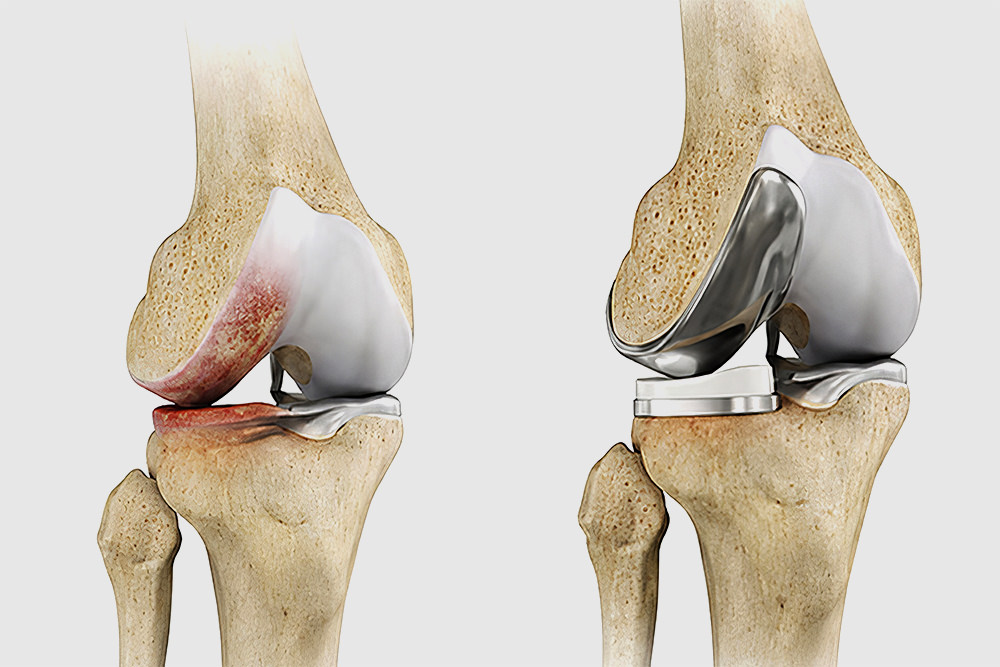
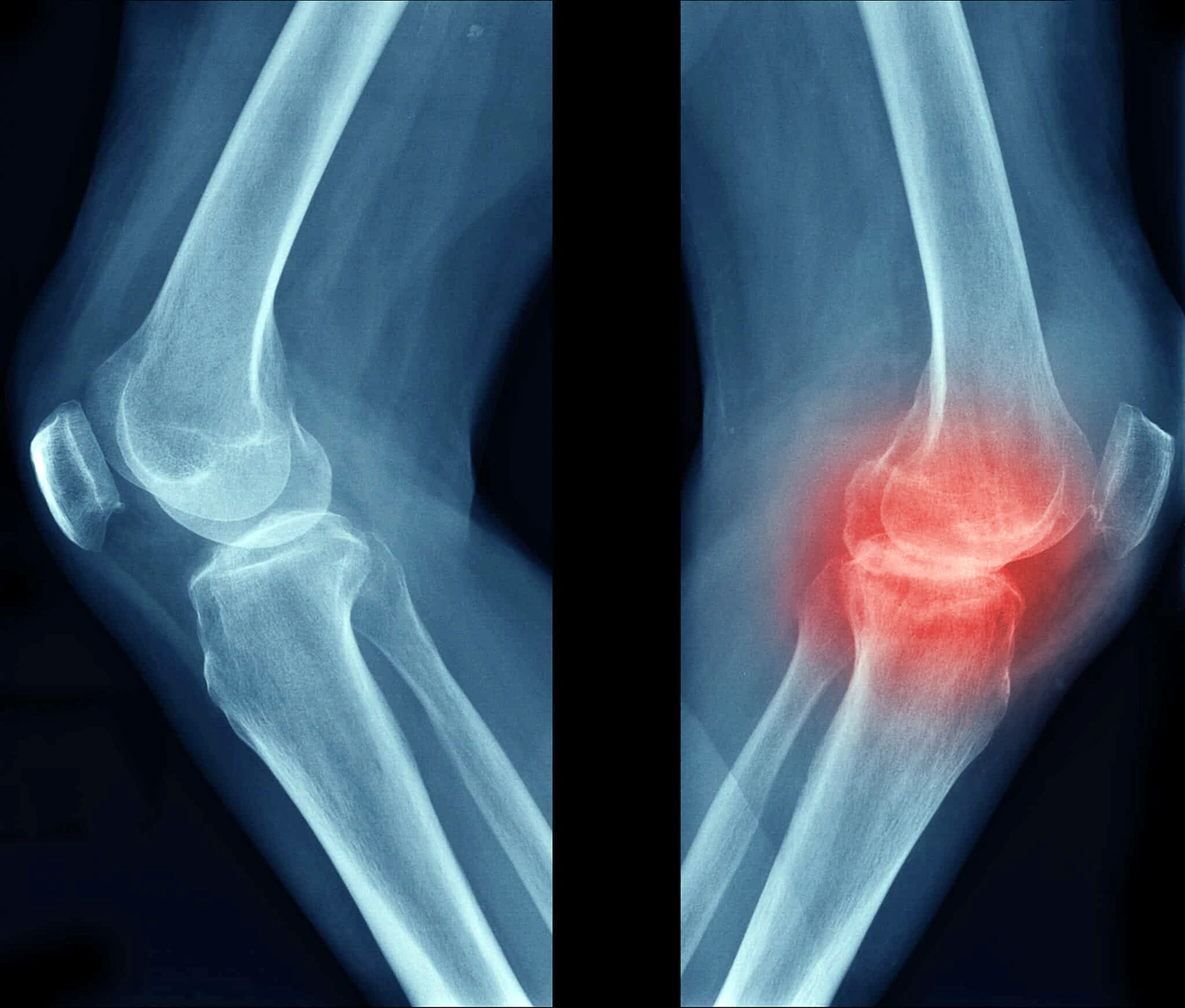
Knee pain often develops over time due to the wear of the cartilage that protects the joint. As it thins, the surfaces become more rigid, causing pain, stiffness, and discomfort during movement.

As osteoarthritis progresses, pain becomes debilitating and begins to limit daily activities.

When conservative treatments are no longer sufficient, knee replacement may be considered to relieve pain and restore mobility.

You may be a candidate for knee replacement if you experience:

  • Persistent pain limiting daily activities such as walking, climbing stairs, or standing
  • Advanced osteoarthritis or joint degeneration confirmed by imaging
  • Stiffness or reduced range of motion
  • Persistent pain despite medications, injections, or physiotherapy
  • Reduced quality of life related to discomfort

What is knee replacement?

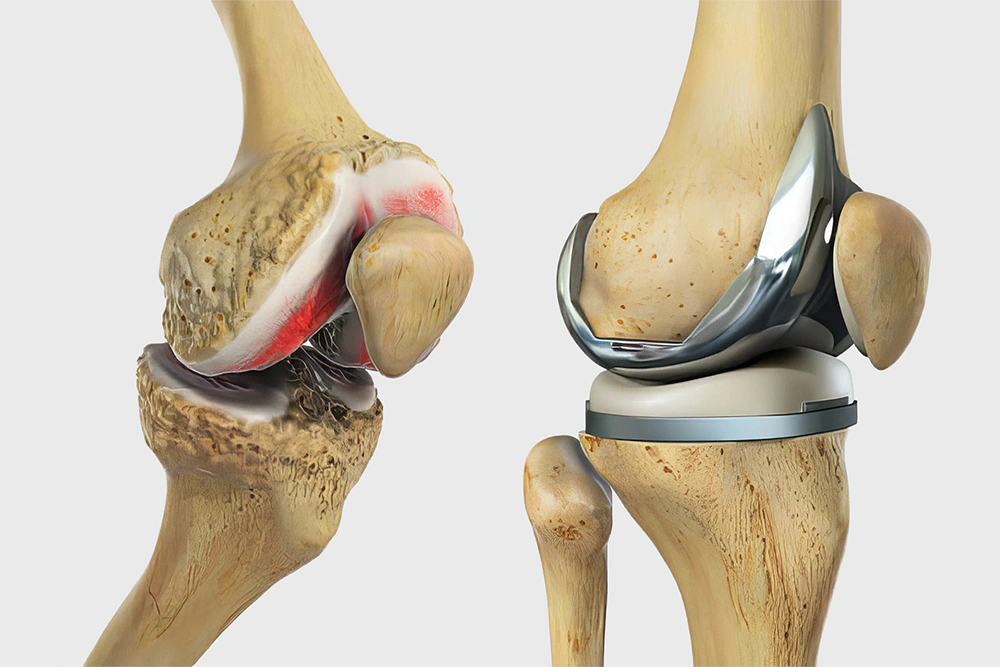
Knee replacement, or knee arthroplasty, is a procedure designed to relieve chronic pain and restore mobility by replacing damaged joint surfaces with implants. It is considered when certain conditions significantly affect the joint and quality of life, and when conservative treatments such as physiotherapy are no longer sufficient.

Total vs. partial knee replacement

Not all knee replacements are the same. The choice of procedure depends on the extent and location of the damage.

Total knee replacement

This involves replacing all compartments of the joint. It is generally recommended when multiple areas of the knee are affected.

This approach provides lasting relief and is the most common procedure.

Partial knee replacement

This targets only the damaged area, preserving healthy bone, cartilage, and ligaments.

Less invasive, this option involves smaller incisions, faster recovery, less postoperative discomfort, and a more natural feel.

Discover a better quality of life with Dr. Yves Laflamme

Dr. Laflamme stands out for his personalized approach to patient care. He takes the time to carefully assess each patient’s condition, taking into account their individual needs and goals. This allows him to tailor the treatment plan and choose the most appropriate type of knee prosthesis, whether partial or total.

Dr. Laflamme’s advanced techniques

Dr. Laflamme uses advanced surgical techniques and technologies to ensure precise implant placement and optimal outcomes for the patient.

Precision through robot-assisted surgery

Dr. Yves Laflamme incorporates advanced robotic technology to optimize the precision and personalization of surgery.

Based on detailed imaging, a 3D model of the knee is created before the procedure, enabling precise planning of the size, positioning, and alignment of the implants according to your anatomy.

During surgery, the robotic system assists Dr. Laflamme in executing the plan with great precision, while maintaining full surgical control.

This approach offers several advantages:

  • More precise implant placement
  • Better joint alignment and balance
  • Preservation of healthy structures
  • Optimized long-term function and durability

By combining surgical expertise with advanced technology, Dr. Laflamme offers a more personalized and refined approach to knee replacement.

Recovery protocol

Dr. Yves Laflamme’s dedication to excellence extends beyond the surgical procedure itself. He incorporates an Enhanced Recovery After Surgery (ERAS) program, which focuses on optimizing patient outcomes and promoting faster recovery. This comprehensive approach, combined with his expertise, allows patients to receive the highest quality care throughout their knee replacement journey.

Visualizing joint transformation
from osteoarthritis to new mobility

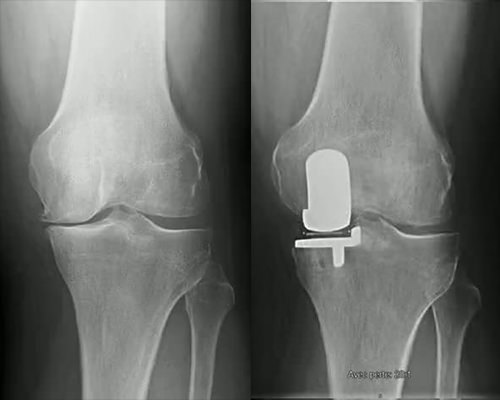
Internal osteoarthritis of the left knee treated with a unicompartmental partial knee replacement.
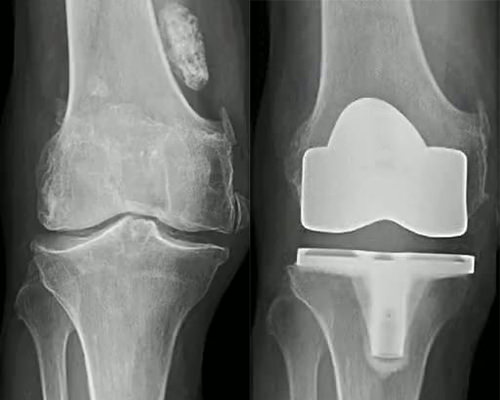
Tricompartmental osteoarthritis of the knee, treated with a total knee replacement.

Life after knee replacement

Knee replacement surgery can significantly improve quality of life. Most patients experience a reduction in pain as well as improvements in mobility, flexibility, and stability. Many return to their daily activities with greater confidence and ease.

Recovery is gradual and includes a physiotherapy program to restore strength and movement. Although full recovery may take several months, improvements are often noticeable within the first few weeks.

Long-term outcomes are very satisfying, with prostheses offering durability and enabling a return to an active and comfortable lifestyle.

Nicole Grandmaison
Nicole Grandmaison
I had surgery with Dr. Laflamme in 2019 and 2020 for a partial replacement of both knees. I then underwent physiotherapy in a disciplined manner. Since then I have been walking without any problems. I recently travelled to Europe where I was walking between 6 and 13 km per day. Thank you, Dr. Laflamme, for changing my life.

Regain an active, pain-free life

Living with persistent knee pain doesn’t have to be your everyday reality. Contact us to discover how Dr. Yves Laflamme can guide you toward lasting relief and a return to a more active and comfortable life.